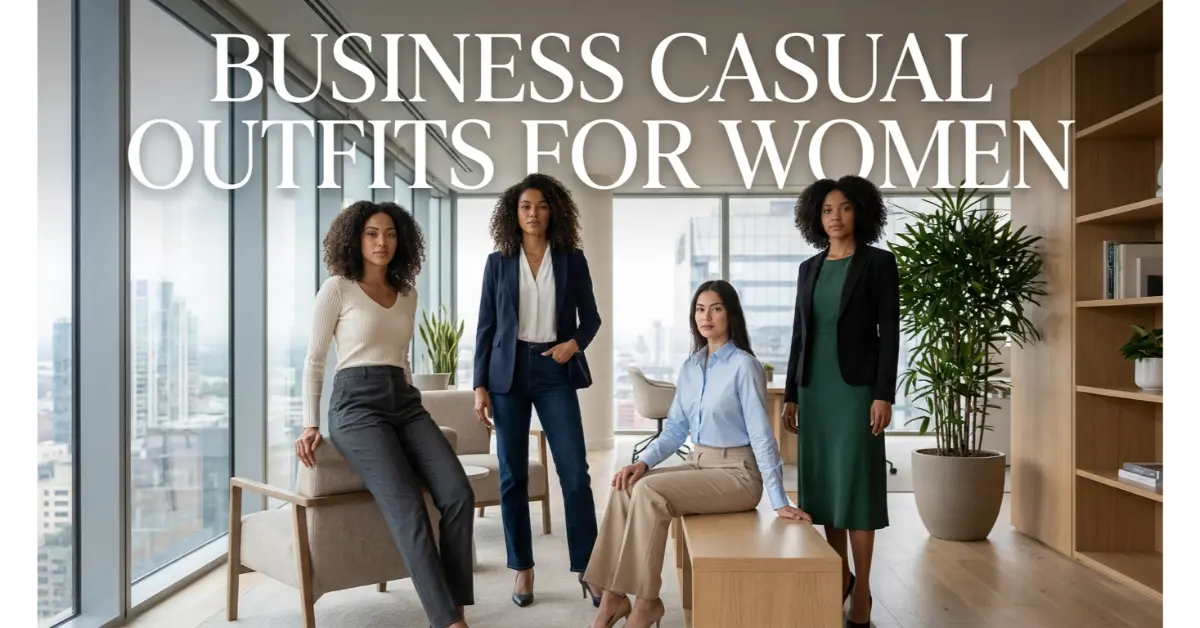
Business Casual Outfits for Women: Stylish Work Looks That Actually Feel Wearable
Getting dressed for work can be surprisingly difficult when the dress code says business casual.
It’s not as formal as wearing a suit, but it isn’t quite the same as getting dressed for the weekend either. You need clothes that look polished enough for a meeting but comfortable enough to wear through emails, errands around the office, commuting, and everything else that happens during a normal workday.
That’s why the best business casual outfits for women aren’t necessarily the most fashionable ones hanging on a shop mannequin. They’re the outfits you can actually live in.
A pair of well-cut trousers, a shirt you don’t have to constantly adjust, comfortable loafers, and a blazer that works with several outfits will usually take you further than a closet full of pieces that only look good together once.
And there’s another thing worth remembering: business casual isn’t identical everywhere. A law office, tech company, school, creative studio, and medical workplace may all interpret the dress code differently.
So think of these ideas as a starting point rather than a strict uniform.
1. Start with Tailored Trousers and a Simple Blouse
When you’re unsure what to wear, this combination rarely feels out of place.
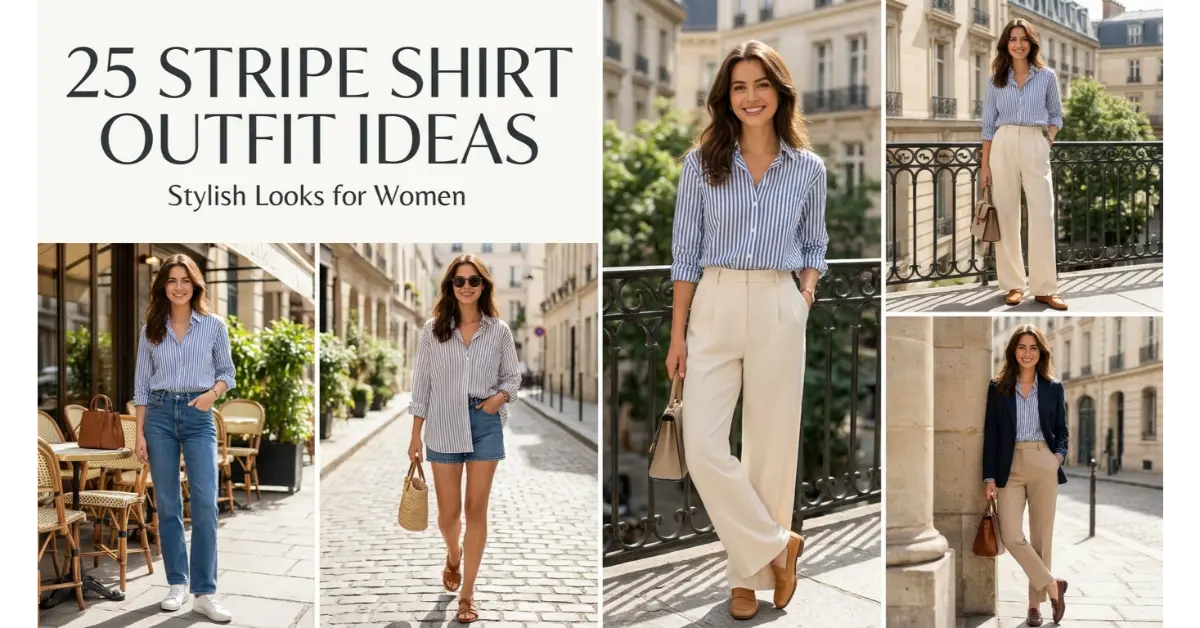
Try straight-leg or slightly wide-leg trousers with a blouse in white, cream, pale blue, or another color you naturally enjoy wearing.
The important part is the fit. Pants that pull at the waist or bunch around the ankles can make even an expensive outfit look uncomfortable.
Finish with loafers or low heels and a structured bag.
It’s simple, but that’s part of the appeal.
2. Make a Blazer Your Shortcut to Looking Polished
You don’t need to wear a blazer every day, but keeping one nearby can save an otherwise ordinary outfit.
Imagine a plain knit top and trousers. Fine, but fairly basic.
Now add a well-fitting blazer and the whole outfit suddenly feels ready for a meeting.
Navy, black, camel, beige, and gray are particularly useful because they work with many different colors underneath.
3. Yes, Jeans Can Work—But It Depends on the Office
A business casual jeans outfit can be perfectly appropriate in a relaxed workplace.
The safer choice is dark or medium-wash denim with a clean finish. Straight-leg, slim-straight, or relaxed tailored shapes generally look more polished than heavily distressed styles.
Pair them with a blouse and blazer rather than another obviously casual piece.
For example:
Dark straight-leg jeans + cream blouse + navy blazer + loafers
That feels considerably more office-ready than jeans paired with a graphic T-shirt and sneakers.
If your workplace is more traditional, though, check the dress code before making denim part of your regular rotation.
4. Wide-Leg Pants Can Look Professional Without Feeling Stiff
Wide-leg trousers are useful when you want a little more comfort without giving up a polished appearance.
A fitted knit top or tucked-in blouse helps balance the volume of the pants.
You can also add a belt if you want more definition around the waist.
For shoes, loafers, pointed flats, or a low block heel usually work better than very casual footwear.
5. Try a Simple Midi Dress
A good midi dress can solve the “what am I wearing tomorrow?” problem in about thirty seconds.
Look for a relatively clean silhouette without excessive cut-outs, extremely casual fabrics, or distracting details.
A solid-colored dress with flats is enough for many offices. Add a blazer when you need a little more structure.
This is one of the easiest business casual dress outfit options because you don’t have to coordinate a top and bottom.
6. Pair a Skirt with a Fine-Knit Sweater
Business casual doesn’t have to mean button-down shirts every day.
A midi skirt with a neat knit sweater can feel softer and more personal while still looking professional.
Pleated, straight, and A-line skirts are all worth considering.
During cooler months, ankle boots can replace loafers. In warmer weather, ballet flats or simple leather flats keep the outfit lighter.
7. Use Color Without Making the Outfit Loud
If your wardrobe is mostly black, gray, and navy, adding color can make getting dressed more enjoyable.
You don’t have to wear a bright suit.
A burgundy blouse with black trousers, a soft green sweater with beige pants, or a blue shirt with cream trousers can be enough.
One noticeable color is often more effective than several competing shades.
8. A Polo Knit Is a Great Alternative to a Blouse
Fine-knit polo shirts sit nicely between casual and formal.
Wear one with tailored trousers and loafers for a comfortable office outfit that doesn’t feel like traditional corporate clothing.
This is particularly useful if you don’t enjoy wearing button-down shirts but still want something that looks intentional.
9. Build Around One Neutral Color
If matching colors isn’t your favorite part of getting dressed, try a monochromatic approach.
Cream trousers with a beige top and camel blazer, for example, create a cohesive look without requiring much thought.
You can break up the outfit with brown shoes, a patterned scarf, or a handbag in another neutral shade.
The result tends to look polished because the colors already work together.
10. Don’t Underestimate a Good Cardigan
A cardigan is useful when your office is chilly or when a blazer feels too formal.
Wear it over a blouse with tailored trousers, or choose a fitted cardigan that can be tucked slightly into high-waisted pants.
Longer cardigans can also work, although they usually look better when the rest of the outfit has some structure.
11. Create an Easy Summer Work Uniform
Summer can make business casual tricky because you want breathable clothing without looking too relaxed.
Lightweight trousers, cotton shirts, linen-blend pieces, midi dresses, and simple skirts are practical choices.
Try:
Light trousers + sleeveless blouse + loafers + lightweight blazer
The blazer can stay on your chair for meetings or overly air-conditioned rooms.
Also pay attention to fabric opacity. Some lightweight summer fabrics become much more transparent in bright daylight than they appear indoors.
12. Layer Properly in Winter
Cold weather gives you more opportunities to work with layers.
A fine sweater over a collared shirt can look polished without the bulk of multiple heavy pieces.
Another easy combination is:
Tailored trousers + knit sweater + long coat + ankle boots
Choose thinner layers rather than one extremely bulky sweater if you want to maintain a neat silhouette.
13. Let Your Shoes Do Some of the Styling
Shoes can completely change the personality of a basic work outfit.
Loafers make trousers feel classic and slightly relaxed. Ballet flats create a softer look. Low heels add polish without the discomfort of very high shoes.
Ankle boots are particularly useful in fall and winter.
If your office permits clean minimalist sneakers, they can work with tailored trousers and a blazer—but this is one area where workplace culture matters a lot.
14. Add Personality Through Accessories
Professional clothing doesn’t have to erase your personal style.
If your clothes are neutral, accessories give you room to experiment.
A colorful handbag, interesting belt, simple silk scarf, watch, or pair of earrings can make an otherwise ordinary outfit feel more like yours.
You don’t need several statement pieces at once. One or two thoughtful details are usually enough.
15. Create a Reliable Friday Outfit
Casual Friday doesn’t necessarily mean wearing whatever you’d wear at home.
If jeans are allowed, try dark denim with a tucked-in knit top and blazer.
Another option is tailored trousers with a clean T-shirt, cardigan, and loafers.
The idea is to relax the outfit slightly while keeping the overall appearance neat.
16. A Simple Blazer-and-Dress Combination
A blazer doesn’t only belong with trousers.
Put one over a simple midi dress when you need a little more structure.
The blazer can also make a dress work across different parts of your day. Take it off after work and the outfit immediately feels less formal.
This is especially handy when you’re going straight from the office to dinner.
17. Try a Tonal Outfit When You Want to Look Put Together
Tonal dressing is one of those styling tricks that looks complicated but isn’t.
Choose different shades of one color family.
For example:
- Cream blouse
- Beige trousers
- Camel belt
- Tan loafers
The pieces don’t need to match exactly. In fact, slightly different shades usually make the outfit more interesting.
18. Keep Prints Controlled
Prints can absolutely work in business casual office outfits, but you don’t need to wear a bold pattern from head to toe.
A floral blouse with solid trousers is an easy combination.
So is a patterned skirt with a plain knit top.
If the print is particularly bold, keep your shoes and accessories understated.
19. Don’t Forget Fit and Fabric
This is one of the most useful business-casual lessons.
A basic outfit made from good-quality, comfortable fabrics and cut to fit you properly can look far more polished than a trendy outfit that doesn’t sit correctly.
Look for fabrics that aren’t excessively thin, wrinkle immediately, or require constant adjustment.
And don’t assume you need expensive clothing. A reasonably priced piece that fits well can be more useful than a costly item you never feel comfortable wearing.
20. Build a Small Work Wardrobe Instead of Buying Everything
You don’t need a separate outfit for every day of the month.
Start with pieces that can work together.
A practical foundation might include:
- Two pairs of tailored trousers
- One pair of dark jeans if permitted
- Two or three work-friendly tops
- One blazer
- One cardigan
- One simple midi dress
- One skirt
- Comfortable loafers
- Flats or low heels
- A practical work bag
Once these basics are in place, seasonal colors and trend pieces become much easier to add.
What Does Business Casual Actually Mean for Women?
There isn’t a single worldwide definition.
Generally, casual business attire for women means looking neat and professional without wearing traditional formal business clothing such as a full suit.
Trousers, blouses, sweaters, skirts, simple dresses, blazers, loafers, flats, and other polished pieces are common choices.
The important detail is your particular workplace.
If you’re starting a new job, look at the employee handbook if there is one. Otherwise, paying attention to what people actually wear can tell you a lot.
When you’re uncertain, it’s usually safer to dress slightly more polished on your first few days.
Business Casual Mistakes That Can Make an Outfit Feel Too Casual
Some pieces are difficult to make work in a professional setting.
Heavy distressing, beachwear, flip-flops, graphic T-shirts, visibly worn clothing, and extremely casual athletic pieces are generally best avoided unless your workplace specifically allows them.
Another common mistake is focusing too much on individual items instead of the entire outfit.
A pair of jeans might be acceptable, but jeans plus a hoodie plus athletic sneakers creates a very different impression from jeans paired with a blouse, blazer, and loafers.
Think about the overall balance.
How to Make Business Casual Clothes Feel More Like You
The goal isn’t to lose your personality when you walk into the office.
If you prefer feminine clothing, work with skirts, dresses, soft colors, and delicate jewelry.
If you like minimalist fashion, build around neutral colors and clean silhouettes.
If you prefer a more modern look, experiment with wide-leg trousers, oversized blazers, structured bags, and simple jewelry.
Your work wardrobe should support your personal style rather than replace it.
Final Thoughts
Good business casual outfits for women don’t need to be complicated.
The most useful pieces are usually the ones you can wear in several combinations: a blazer that works with jeans and trousers, a blouse that looks good with both a skirt and pants, or loafers that can handle a full day at work.
Start by understanding your workplace dress code. Then build a small collection of comfortable, well-fitting pieces around it.
Once you have those basics, you can bring in color, prints, accessories, and seasonal trends without rebuilding your entire wardrobe every few months.
And remember that looking professional isn’t about wearing uncomfortable clothes or dressing exactly like everyone around you. The best work outfit is one that looks appropriate, feels comfortable, and lets you concentrate on your actual day rather than worrying about what you’re wearing.
Frequently Asked Questions
What are the best business casual outfits for women?
Some reliable options include tailored trousers with a blouse, dark jeans with a blazer where permitted, midi dresses with flats, skirts with knit tops, and wide-leg pants with tucked-in shirts.
Can women wear jeans for business casual?
Yes, in many relaxed workplaces. Choose clean, dark or medium-wash jeans without heavy distressing and pair them with more polished pieces such as a blouse, blazer, loafers, or structured bag.
Are sneakers business casual for women?
It depends on the workplace. Some modern offices allow clean minimalist sneakers, while traditional workplaces may expect loafers, flats, or dress shoes.
What should women wear to a business casual interview?
When the dress code is unclear, it’s usually better to choose the more polished end of business casual. Tailored trousers, a blouse, blazer, and loafers or low heels are a safe starting point.
Can a dress be business casual?
Yes. A simple, office-appropriate midi dress can work very well. Add a blazer, cardigan, flats, or low heels depending on the setting.
What shoes are best for business casual workwear?
Loafers, ballet flats, low heels, ankle boots, and workplace-approved minimalist sneakers are all possibilities. Comfort matters, especially if you’re on your feet for much of the day.
What colors are best for business casual clothes for women?
Black, navy, gray, beige, cream, white, camel, and brown are easy foundations. You can add personality with colors such as burgundy, blue, green, pink, or muted purple.
How many business casual outfits do I need?
You don’t need dozens. A small wardrobe of interchangeable trousers, tops, one or two layers, a dress, comfortable shoes, and a practical bag can create many combinations.
What should women avoid wearing in a business casual office?
This varies by workplace, but heavily distressed clothing, beachwear, flip-flops, graphic T-shirts, overly revealing pieces, and worn-out clothing are generally poor choices for professional settings.
How can I look stylish while dressing business casual?
Focus on fit first, then use color, proportions, texture, and accessories to add personality. A simple outfit often looks more stylish when the pieces fit well and work together rather than when there are too many trends competing for attention.